Abnormal Head Shape in Infants
When asymmetry or flattening of the head is noticed in infants, a physical examination is used to distinguish between plagiocephaly and craniosynostosis.
Prof. Dr. Alp Özgün Börcek
Neurosurgery
Ankara Güven Hastanesi
You can schedule an appointment for a second consultation or examination.
Schedule an Appointment via WhatsApp Contact
Prof. Dr. Alp Özgün Börcek
Neurosurgery
Pediatric Neurosurgery
Ankara Güven Hastanesi
This content is for informational purposes only; a medical examination is required for diagnosis and treatment. Medical texts must be reviewed by a doctor.
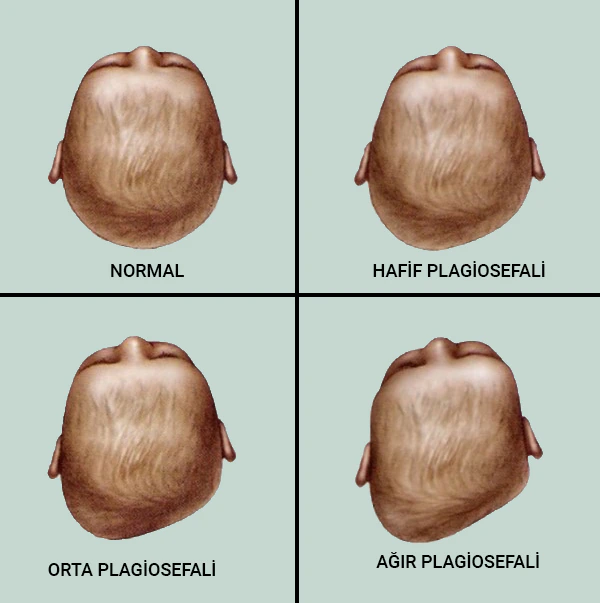
Noticing asymmetry, flattening, or a prominent forehead in infants can cause concern for parents. In most cases, this is positional (mechanical) plagiocephaly and can be corrected with measures taken at home. However, some deformities may be associated with craniosynostosis—the premature fusion of the skull sutures—and early differentiation is important.
Prof. Dr. Alp Özgün Börcek provides services related to the evaluation of cranial deformities in infants as part of its pediatric neurosurgery program at Ankara Güven Hastanesi. The text below is for general informational purposes only; an examination is required for diagnosis and treatment planning.
Why Does the Shape of a Baby's Head Change?
During the neonatal and infant periods, the skull bones are soft and flexible; they are sensitive to external pressure. The main factors affecting head shape are:
- Sleeping position: The baby frequently sleeping on the same side (more common following the recommendation to sleep on the back)
- Intrauterine position: Constant pressure on one side of the head during pregnancy
- Pressure during childbirth: Especially in cases of prolonged labor or labor requiring medical intervention
- Torticollis (neck stiffness): The head remaining turned in one direction due to shortening of the neck muscle
- craniosynostosis: Premature closure of the cranial sutures (a rarer but important differential diagnosis)
Mild flattening or asymmetry is common during the first 2–3 months and can often be corrected by adjusting the position. If the deformity progresses or stiffness is felt along the suture line, an examination is recommended.
Is Every Skull Deformity craniosynostosis?
No. The vast majority of cases of what is commonly referred to as "flat head" are positional plagiocephaly. These include flattening on one side of the baby's head, ears appearing at different levels, or asymmetry in the forehead.
craniosynostosis is the premature fusion of the sutures (zipper-like joints) between the skull bones. In this condition, skull growth is restricted in a specific direction, and the deformity becomes progressively more pronounced. A physical examination is essential for differential diagnosis; imaging is scheduled as needed.
For more information craniosynostosis You can check out the page.
What Is Positional plagiocephaly?
positional plagiocephaly (asymmetrical head shape) is an asymmetrical flattening of the baby’s head caused by the baby lying in the same position for an extended period. When viewed from above, one side of the head may appear flatter; the ears may be at different heights.
This situation usually does not require surgery. The first step is positional therapy: tummy time, changing the sleeping position, and physical therapy if torticollis is present. In moderate-to-severe cases, treatment with a helmet (orthosis) may be considered.
For more information Positional plagiocephaly You can check out the page.
What Findings Suggest craniosynostosis?
The following findings should be carefully evaluated for craniosynostosis. None of these findings alone constitutes a definitive diagnosis; however, early evaluation is important:
- Along the cranial suture line a hard bump or line that can be felt by touch
- Head circumference in a specific direction stagnation of growth, excessive growth in the other direction
- Forehead prominence, unilateral flattening or marked asymmetry
- fontanelle has closed prematurely looking like that, being swollen or sunken
- On the eyes or eyebrows pronounced asymmetry
- Despite the position adjustment the progression of the shape
When craniosynostosis is confirmed, surgical planning is considered. Early diagnosis is important for treatment outcomes.
What Is Checked During the Examination?
During a Pediatric Neurosurgery examination, the following topics are evaluated together:
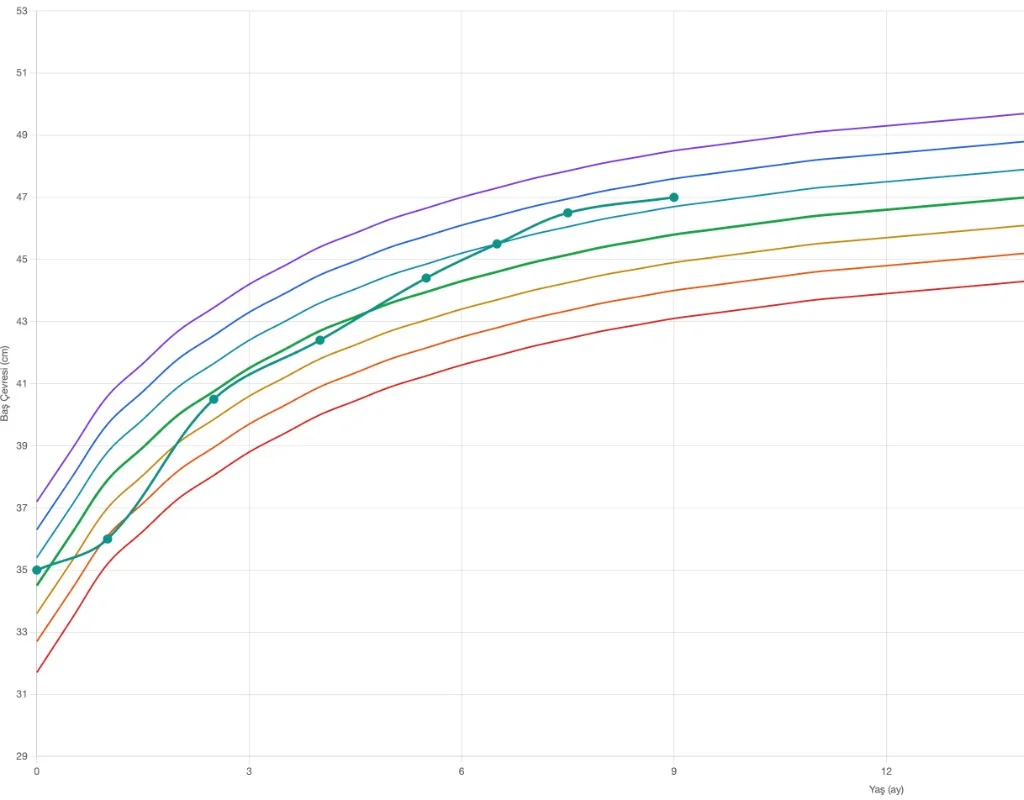
- Head measurements: Circumference, front-to-back and side diameters; growth curve
- Suture lines: Hardness or swelling detected on palpation
- Facial and ear symmetry: Ear position, forehead shape
- Neck movements: Presence of torticollis
- Neurological development: General condition and developmental stages
Imaging (CT or MRI) is not necessary for every infant; it is scheduled for selected cases where craniosynostosis is suspected. Diagnosis often begins with a thorough physical examination.
Why Are Head Circumference Measurements Important?
Head circumference measurements are particularly important in these patients, and a single measurement is usually not sufficient. Children grow dynamically, so rather than relying on a single measurement, measurements should be taken at regular intervals—ideally by the same person—and charts should be created as shown in the figure to assess their progress. Be sure to bring these with you when you come for your appointment.
When Is Helmet Therapy Considered?
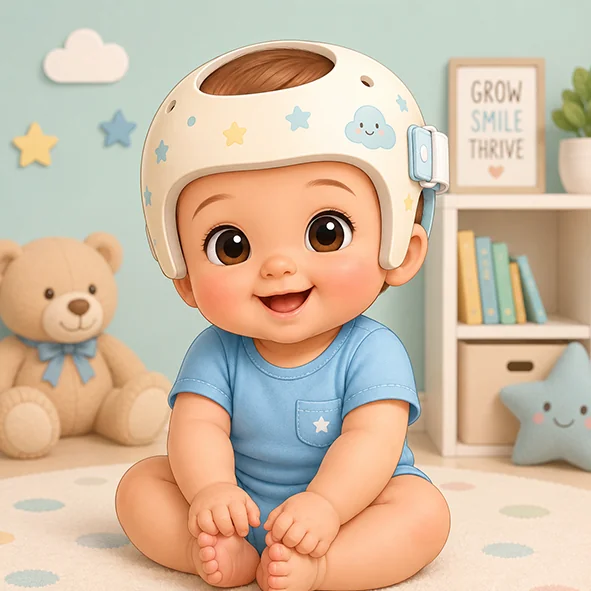
Helmet (orthotic) therapy is an option considered for positional plagiocephaly. The helmet, which is custom-designed for the baby’s head, applies pressure to promote more symmetrical growth.
Generally 4–6 months to 12 months It is considered in moderate-to-severe cases where adequate response to positional adjustments cannot be achieved. Not every case of asymmetry requires a helmet; the decision is made following an examination.
In craniosynostosis, surgical planning is performed instead of helmet therapy; these two conditions should not be confused.
Under What Circumstances Is a Pediatric Neurosurgery Evaluation Required?
The initial evaluation is usually performed by a pediatrician. A pediatric neurosurgeon’s examination is recommended in the following situations:
- Despite the position adjustment If there is no improvement within 2–3 months
- In the skull stiffness along the suture line if it is felt
- Deformity if it continues to progress
- If the pediatrician has recommended an evaluation for craniosynostosis
- If neck movement is restricted and plagiocephaly is present (torticollis)
The purpose of a Pediatric Neurosurgery examination is often not surgery; To rule out craniosynostosis and to determine the appropriate course of treatment.
Precautions You Can Take at Home
Simple measures that can be taken at home if positional plagiocephaly is suspected:
- Tummy time (placing the baby on their stomach): While awake, keep your baby in the prone position regularly throughout the day
- Change the direction of the berth: Lay the baby down, turning its head first to the right and then to the left
- Eye-catching toys: Encourage them to look in the opposite direction, not the one their head is turned toward
- Limit the use of baby carriers: Try to spend less time staying in the same position for long periods
These measures are usually sufficient for many mild cases. If you still have concerns, make an appointment for an examination.
When asymmetry or flattening of the head is noticed in infants, a physical examination is used to distinguish between plagiocephaly and craniosynostosis.
Schedule an Appointment via WhatsApp ContactRelated Pages


Frequently Asked Questions
An examination is recommended if there is noticeable asymmetry, rapid changes in shape, a feeling of stiffness along the suture line, or limited neck movement. The initial examination can be performed by a pediatrician.
No. Most cases of an irregularly shaped head are positional plagiocephaly and can be corrected with conservative treatments. craniosynostosis is rarer and is distinguished through physical examination.
Yes. In positional cases, placing the infant on their stomach and changing their sleeping position can be helpful. Physical therapy is also important if the infant has torticollis.
positional plagiocephaly is generally a cosmetic condition; it does not affect mental development. In craniosynostosis, however, early treatment is important for brain development.
No. Mild cases can be managed with positional adjustments. In moderate-to-severe cases, helmet therapy may be considered based on a specialist’s decision.
Mild cases of scoliosis usually resolve within the first year. If significant straightening persists or progresses, an examination is necessary.
When craniosynostosis is confirmed, surgical planning is considered. The decision is based on the examination, imaging, and the infant’s age.
Yes. If a baby constantly turns their head in one direction, it can increase the risk of plagiocephaly. Early physical therapy is important for both the neck and the shape of the head.
The initial evaluation is conducted by a pediatrician. If concerns persist, an examination by a pediatric neurosurgeon is recommended.
No. Imaging is scheduled for selected cases where craniosynostosis is suspected. In most infants, a detailed physical examination is sufficient.
Author: Prof. Dr. Alp Özgün Börcek
Last updated: July 2, 2026
This content is provided for informational purposes only; it is not intended to replace a personal diagnosis or treatment.