Leg Pain from Lumbar Disc Herniation
Pain, numbness, or weakness radiating from the lower back down the leg may indicate nerve compression; early evaluation is important.
Prof. Dr. Alp Özgün Börcek
Neurosurgery
Ankara Güven Hastanesi
You can schedule an appointment for pain that radiates from the lower back down to the leg.
Schedule an Appointment via WhatsApp Contact
Prof. Dr. Alp Özgün Börcek
Neurosurgery
Ankara Güven Hastanesi
This content is for informational purposes only; a medical examination is required for diagnosis and treatment. Medical texts must be reviewed by a doctor.
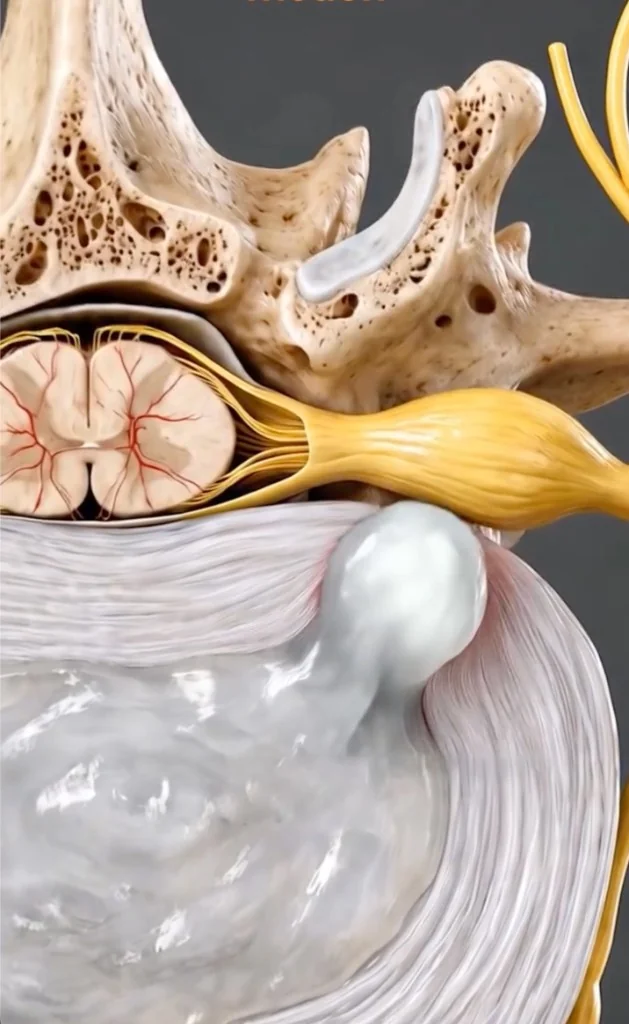
The spreading of lower back pain to the hip, thigh, or the back or side of the leg is commonly known as sciatic pain is known as. Its medical name is lumbar radiculopathyis: The nerve root emerging from the lumbar vertebrae is compressed due to a disc, a bony spur, or spinal stenosis.
Not all lower back pain radiates to the leg, and not all leg pain requires surgery. What matters is the direction and severity of the pain, its duration, the presence of neurological symptoms such as numbness or weakness, and its impact on daily life. Prof. Dr. Alp Özgün Börcek and Ankara Güven Hastanesi provide services for the evaluation of these symptoms within the scope of neurosurgery.
What Does Lower Back Pain That Radiates Down the Leg Mean?
In a lumbar disc herniation (lumbar disc herniation), the outer ring of the intervertebral disc tears, and the inner portion may press on a nerve root. This pressure causes pain, numbness, or a tingling sensation along the nerve’s path—through the hip, the back of the thigh, the back of the knee, the calf, or the foot.
The pain is usually one-sided. The location of the pain varies depending on which nerve root is affected: the L5 root may radiate to the top of the foot, while the S1 root may radiate to the heel and the outer edge of the foot. During the physical examination, the straight leg raise test, reflexes, and sensory examination help determine which nerve root is affected.
Coughing, sneezing, or straining An increase in pain during this time suggests nerve root irritation; however, a diagnosis is not made based on this finding alone—the MRI and clinical examination are evaluated together.
What Symptoms Should You Watch For?
- Sharp or burning pain radiating down the leg — may worsen while sitting, walking, or at night
- Numbness, tingling — in the legs, feet, or toes
- Power loss — inability to lift the foot, difficulty climbing stairs, inability to walk on the heel or toes
- Along with lower back pain or after lower back pain leg pain that has just started
- Worsening with prolonged sitting — while driving, while working at a desk
If symptoms subside within a few days, conservative treatment is sufficient in most cases. If pain lasts longer than 4–6 weeks, is gradually worsening, or is accompanied by numbness or weakness, a specialist evaluation is recommended.
Are Numbness and Weakness a Cause for Concern?
Yes. Numbness and tingling may indicate that nerve transmission is impaired. Power loss (loss of ankle dorsiflexion, inability to lift the toes) is a more serious sign of compression and requires early evaluation.
It is common for pain, accompanied by mild numbness, to resolve with conservative treatment. However, the spread of numbness, progressive weakness, or symptoms in both legs may require urgent evaluation.
Findings identified during a neurological examination should be interpreted in conjunction with the MRI images; a small herniation seen on an MRI may not always be the cause of the symptoms.
Is Pain That Radiates Down Each Leg a Herniated Disc?
No. There are other causes of pain that radiates down the leg:
- Muscle spasms and myofascial pain — activation of the back muscles
- Piriformis syndrome — a pinched nerve in the hip area
- Spinal stenosis (spinal stenosis) — pain and numbness in the legs while walking
- Pain originating in the joints and hips — The distinction between the lower back and the legs is made through examination
For this reason, rather than making a diagnosis based solely on an MRI, the patient’s medical history, physical examination findings, and imaging results are evaluated together.
The Difference Between lumbar disc herniation and a Narrow Spinal Canal
in the lumbar disc herniation The pain usually becomes more pronounced when sitting or in certain positions; a single nerve root is affected. In spinal stenosis A typical presentation is pain, numbness, or a sensation of heaviness in the legs while walking; these symptoms improve with rest or when bending forward.
Both conditions can cause symptoms affecting the leg. The diagnosis is made through a physical examination, the nature of the symptoms, and an MRI. For more information, Narrow Channel You can check out the page.
When Is an MRI Necessary?
An MRI isn't necessary for every case of back pain. For mild back pain in the first few weeks, improvement is expected with a physical examination, medication, and adjustments to activity levels. An MRI is typically scheduled in the following situations:
- If symptoms last longer than 4–6 weeks
- If you experience pain, numbness, or weakness radiating down your leg
- If the response to conservative treatment is inadequate
- If surgery is being considered
If you have a previous MRI, you can submit it along with the report and images (on CD, USB, or digitally). The report alone is not sufficient; it is important to review the images.
Should Non-Surgical Treatment Be Tried First?
Yes. The vast majority of lumbar disc herniation cases resolve without surgery. First-line treatment typically includes the following:
- Short-term rest (prolonged bed rest is not recommended)
- Pain relievers and muscle relaxants
- Physical therapy and core stabilization exercises
- Activity management — avoiding heavy lifting and prolonged sitting
- Epidural injection, if necessary
Most patients experience significant relief within a few weeks. The treatment plan is tailored to the severity of the symptoms and the neurological findings.
How Is Treatment Planned?
Treatment steps are determined based on the duration of symptoms, MRI findings, and a neurological examination. For mild to moderate symptoms, medication, physical therapy, and lifestyle modifications are the first-line treatments.
If pain significantly limits daily activities, sleep, or walking, treatment is intensified. Injection therapies can help control pain in appropriate cases. Surgery is considered in selected cases where other methods are ineffective or where there is a risk of neurological deficits.
For more information lumbar disc herniation Treatment You can check out the page.
When Is Surgery Considered?
Surgery is not necessary for every hernia patient. Surgery is generally considered in the following situations:
- 6–12 weeks old if there is no response to appropriate conservative treatment
- Progressive loss of strength if any
- Unbearable pain and if there is a significant decline in quality of life
- Emergency Findings — loss of strength, urinary and fecal incontinence (emergency surgery)
lumbar disc herniation surgeries are typically performed using microsurgery; the portion of the disc compressing the nerve root is removed. The most appropriate method for each patient is discussed following an examination.
When Should You Seek Emergency Care?
Instead of waiting for an appointment for the following conditions to the emergency room Apply:
- Sudden loss of strength in the foot or leg
- Inability to control urine or stool / incontinence
- Numbness in the genital area (simplicity)
- Progressive bilateral leg numbness or signs of paralysis
- Rapidly progressing pain and neurological deficits following trauma
These situations suggest conditions requiring urgent intervention, such as cauda equina syndrome. For stable lower back and leg pain, a scheduled examination is sufficient.
How to Prepare for an Exam?
During the examination, the patient is asked when the pain began, which leg is affected, how it relates to sitting and walking, and what treatments have been tried previously. During the neurological examination, leg strength, reflexes, and sensation are assessed.
Documents you should bring: If available, MRI/CT scans and reports, physical therapy notes, a list of medications you are taking, and previous discharge summaries.
You can contact Prof. Dr. Alp Özgün Börcek via WhatsApp or phone to schedule an appointment at Ankara Güven Hastanesi.
Pain, numbness, or weakness radiating from the lower back down the leg may indicate nerve compression; early evaluation is important.
Schedule an Appointment via WhatsApp ContactRelated Pages



Frequently Asked Questions
No. Muscle spasms, piriformis syndrome, spinal stenosis, or other causes can also lead to pain that radiates down the leg; a physical examination is used to distinguish between them.
An MRI is not necessary for every case of back pain. An MRI is scheduled if symptoms persist, if there is numbness or weakness, or if the response to treatment is inadequate.
Increased intra-abdominal pressure can trigger nerve root irritation; this is a finding suggestive of a herniated disc, but it does not, by itself, establish a diagnosis.
Yes, many hernias shrink over time, or the symptoms can be managed with conservative treatment.
In lumbar disc herniation, the disc presses on a nerve; in spinal stenosis, the spinal canal narrows. Leg symptoms that worsen while walking are more typical of spinal stenosis.
If there is no response to conservative treatment, if muscle weakness is progressing, or if there are emergency symptoms (urinary incontinence, sudden paralysis), surgery is considered.
Mild numbness may resolve with conservative treatment; early evaluation is necessary in cases of progressive numbness or weakness.
A neurosurgeon is consulted for the evaluation of lumbar disc herniation and pain radiating down the leg.
Author: Prof. Dr. Alp Özgün Börcek
Last updated: July 2, 2026
This content is provided for informational purposes only; it is not intended to replace a personal diagnosis or treatment.