Spine Surgery in Ankara
Examination and treatment options are evaluated for lumbar disc herniation, cervical disc herniation, spinal stenosis, and spine-related arm and leg pain.
Prof. Dr. Alp Özgün Börcek
Neurosurgery
Ankara Güven Hastanesi
You can schedule an appointment for a second consultation or examination.
Schedule an Appointment via WhatsApp Contact
Prof. Dr. Alp Özgün Börcek
Neurosurgery
Ankara Güven Hastanesi
This content is for informational purposes only; a medical examination is required for diagnosis and treatment. Medical texts must be reviewed by a doctor.
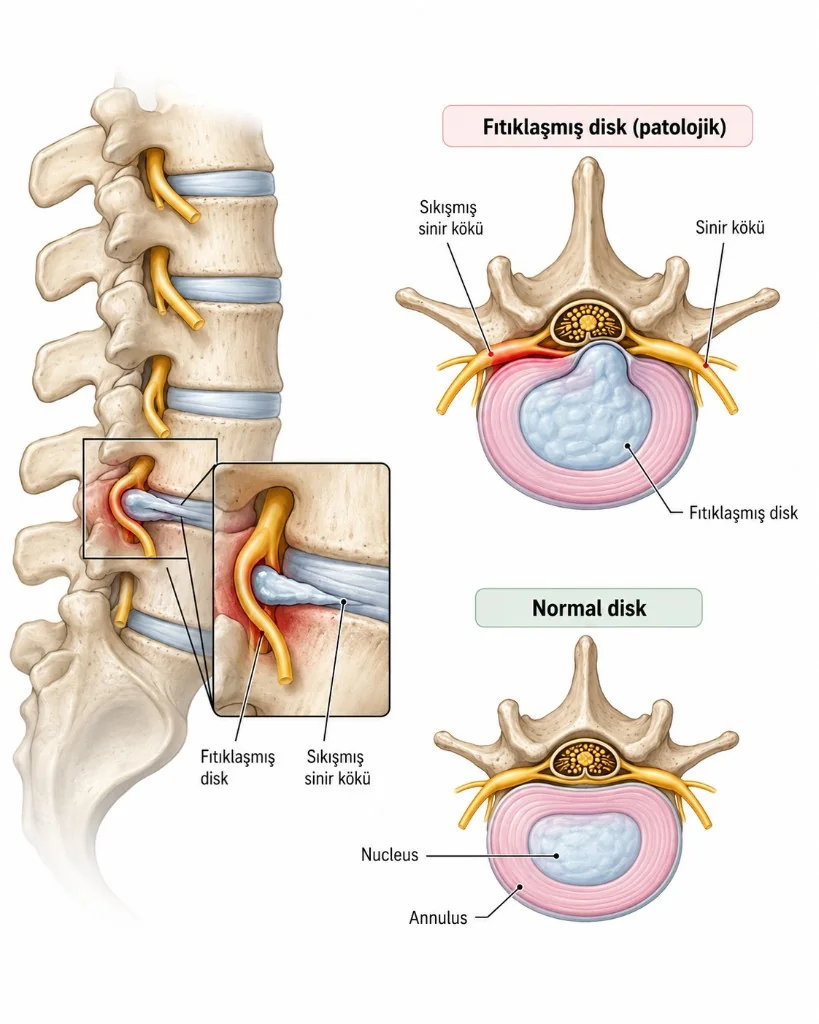
Back pain is the second most common reason for seeing a doctor after the flu; however, not all back pain means a herniated disc or surgery. An MRI isn't necessary for every case of back pain; For short-term and mild pain, an initial examination and conservative treatment may be sufficient. cervical disc herniation, lumbar disc herniation, and spinal stenosis (spinal stenosis) can lead to arm or leg pain, numbness, and weakness through different mechanisms.
This page summarizes which symptoms are important to bring up when coming in for a spinal surgery consultation in Ankara, the difference between a cervical disc herniation and spinal stenosis, and when surgery becomes an option. Detailed topic pages: lumbar disc herniation, cervical disc herniation, spinal stenosis.
Prof. Dr. Alp Özgün Börcek provides services related to the evaluation and treatment planning of spinal disorders within the scope of neurosurgery at Ankara Güven Hastanesi. The text below is for general informational purposes only; an examination is required for diagnosis and treatment planning.
What Symptoms Might Be Caused by the Spine?
Symptoms related to the spine generally vary depending on the affected area. The same term, “leg pain,” can describe different conditions in cases of lumbar disc herniation and spinal stenosis:
- Waist area: Back pain, pain radiating to the hip or leg (sciatica), numbness, tingling, pain that worsens with coughing or sneezing, and pain that worsens after sitting for a long time. Details: Lower back pain that radiates down the leg.
- Neck area: Neck pain, pain radiating to the shoulder and arm, numbness in the fingers, headache, limited neck movement. Details: pain radiating from the neck to the arm.
- spinal stenosis: Pain or numbness in the legs while walking, relief upon resting, a sensation of heaviness in the legs, and symptoms that worsen as the distance walked increases. Details: Numbness in the legs when walking.
Some of these symptoms may also be caused by muscle spasms, poor posture, or other factors. What matters is the nature of the pain, its duration, its impact on daily life, and the presence of neurological symptoms (numbness, weakness). If your symptoms are limiting your daily activities, a specialist evaluation is recommended.
lumbar disc herniation
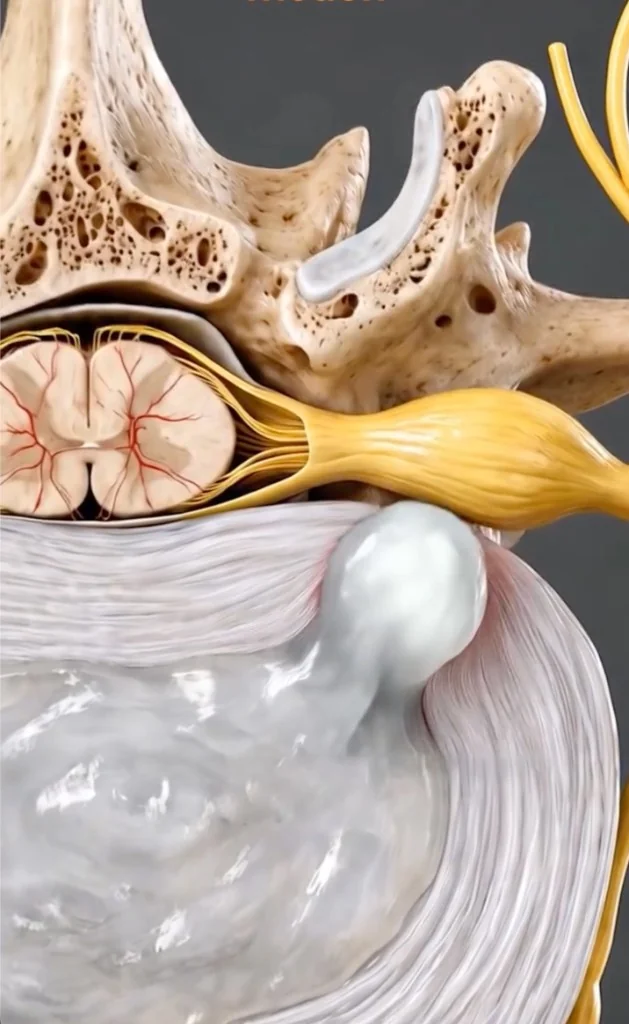
lumbar disc herniation (lumbar disc herniation) occurs when the outer layer of the disc between the vertebrae tears, causing the inner portion to press on a nerve root. This may be accompanied by lower back pain, as well as pain radiating down the leg, numbness, or weakness. Depending on which nerve root is affected, symptoms may radiate to the hip, thigh, calf, or foot.
Important: The presence of a herniated disc on an MRI does not always require surgery. Many herniations shrink on their own, or symptoms can be managed with conservative treatment. Surgery is considered in selected cases—particularly in cases of muscle weakness, urinary or bowel dysfunction, or prolonged severe pain.
For more information lumbar disc herniation You can check out the page. For pain radiating down the leg, Lower Back Pain That Radiates Down the Leg This page is helpful.
cervical disc herniation
cervical disc herniation (cervical disc herniation) is a condition in which a disc between the cervical vertebrae presses on a nerve root or the spinal cord. Neck pain, pain radiating to the shoulder and arm, and numbness and tingling in the hand are common symptoms. Sometimes it is accompanied by headaches or limited neck movement.
Most patients with cervical disc herniation also recover with non-surgical treatment. Surgery is considered if muscle weakness is progressing, if there is no response to conservative treatment, or if there are signs of spinal cord compression. MRI findings and the neurological examination should be interpreted together.
For more information cervical disc herniation You can check out the page. For pain radiating down the arm, Pain Radiating from the Neck to the Arm This page is helpful.
Narrow Channel
spinal stenosis (spinal stenosis) is the narrowing of the canal through which the spinal cord or nerves pass. It typically develops with age; a herniated disc, joint overgrowth, or bone spurs may contribute to it.
Typical finding: while walking pain, numbness, or weakness in the legs; when sitting or leaning forward Relief. Unlike lumbar disc herniation, the pain typically becomes more pronounced while walking rather than while sitting. The diagnosis is made via MRI and is evaluated in conjunction with physical examination findings.
For more information Narrow Channel and Numbness in the legs when walking You can check out their pages.
How Do You Distinguish Between a lumbar disc herniation, a cervical disc herniation, and a Narrow Spinal Canal?
All three conditions are associated with “nerve compression”; however, the timing and nature of the symptoms differ:
- lumbar disc herniation: Pain in one leg that often worsens when sitting or coughing
- cervical disc herniation: Pain and numbness radiating down the arm; triggered by neck movement
- spinal stenosis: Leg discomfort that worsens with walking; improves with rest
The diagnosis is not made based solely on the MRI report. The medical history, neurological examination, and imaging results are interpreted together. That is why, during a consultation for spinal surgery, the question “which page / which condition” begins with the symptoms you describe.
When Is an Emergency Evaluation Necessary?
Instead of waiting for an appointment for the following conditions to the emergency room Apply:
- On the leg or arm sudden loss of power (inability to lift the ankle or arm)
- Inability to control urine or stool / incontinence (suspected cauda equina syndrome)
- Numbness in the saddle area (seat)
- Signs of increasing numbness or paralysis
- Rapidly progressing pain and neurological deficits following trauma
These situations may require emergency surgery or urgent intervention. For stable back or neck pain, a scheduled examination is sufficient.
Do I Need to Bring an MRI?
An MRI isn't necessary for every case of back pain. For short-term, mild back pain, an examination is performed first; improvement is expected with pain relievers, muscle relaxants, and adjustments to activity levels. An MRI is typically scheduled in the following situations: if symptoms persist for more than 4–6 weeks, if there is pain or numbness radiating to the leg or arm, if weakness is detected, or if surgery is being considered.
If you have any previous MRI or CT scans with reports and images (CD, USB, or digital) You may submit them. The report alone is not sufficient; it is important to review the images.
Documents you should bring: Current MRI/CT images and reports, previous treatment summaries, physical therapy notes, and a list of the medications you are taking.
What Is Assessed During a Spinal Examination?
- Complaint history: Location of the pain, duration, movements that trigger it, waking up at night
- Neurological examination: Strength, sensation, reflexes, walking
- Viewing: Correlation between MRI/CT findings and clinical presentation
- Previous treatments: History of medication, physical therapy, injections, and surgery
- Impact on life: Work, sleep, walking distance
The goal is not simply to say, “There’s a herniated disc on the MRI”; it is to determine the cause of your symptoms and identify the appropriate course of treatment for you.
When Is Surgery Considered?
Spinal surgery is not necessary for every patient with a herniated disc or spinal stenosis. Surgery is generally considered in the following situations:
- 6–12 weeks old if there is no response to appropriate conservative treatment (medication, physical therapy, activity modification)
- Progressive neurological symptoms if present (loss of strength, increased numbness)
- Quality of life if there is a noticeable decline (inability to work, sleep, or walk)
- Emergency Findings (loss of strength, urinary incontinence) — emergency surgery
The surgical approach (microsurgery, endoscopic surgery, open decompression, etc.) is determined based on the type and level of the condition, as well as the patient’s clinical status. The most appropriate approach for each patient is discussed following the examination.
Should Conservative Treatment Be Tried First?
Yes. The vast majority of lower back and cervical disc herniation conditions resolve without surgery. First-line treatment typically includes the following:
- Short-term rest (prolonged bed rest is not recommended)
- Pain relievers and muscle relaxants
- Physical Therapy and Exercise
- Activity adjustments (avoiding heavy lifting)
- Injection treatments, if necessary
In cases of spinal stenosis, a conservative approach may be tried first for mild to moderate symptoms. Surgery is considered in cases that do not respond to these methods or that carry a risk of neurological loss.
Which Doctor Should You See for Spinal Problems?
In the evaluation of lumbar disc herniation, cervical disc herniation, and spinal stenosis neurosurgery A specialist is consulted. A neurologist may also be involved in the diagnostic process; the decision to perform surgery and the procedure itself fall under the scope of neurosurgery.
A physical therapist may be involved during the rehabilitation period, and an orthopedic specialist may be consulted for certain spinal deformities. A consultation with a neurosurgeon is appropriate for the initial evaluation. You can schedule an appointment for a spinal surgery consultation in Ankara; you can discuss options for lower back/cervical disc herniation and spinal stenosis together.
Examination and treatment options are evaluated for lumbar disc herniation, cervical disc herniation, spinal stenosis, and spine-related arm and leg pain.
Schedule an Appointment via WhatsApp ContactRelated Pages



Frequently Asked Questions
No. For short-term, mild back pain, an initial examination and conservative treatment may be sufficient. An MRI is scheduled if symptoms persist, if there is pain or numbness radiating to the leg or arm, if muscle weakness is detected, or if surgery is being considered.
Yes, both fall under the scope of neurosurgery.
No. The vast majority of patients recover with non-surgical treatment.
In lumbar disc herniation, the disc presses on a nerve; in spinal stenosis, the spinal canal narrows. Symptoms that worsen while walking are more typical of spinal stenosis.
No. MRI findings are evaluated in conjunction with symptoms; many herniations are managed through follow-up or conservative treatment.
No. It could also be caused by a muscle spasm, nerve irritation, or other factors; a physical examination is needed to determine the cause.
Every surgical procedure carries risks; however, when performed under appropriate indications and by experienced surgeons, it is safe. The decision is made following an examination.
Appropriate physical therapy does not cause a herniated disc to worsen; on the contrary, it supports the spine by strengthening the muscles.
Not in every surgery. In simple hernia surgeries, a plate is generally not required; its use may be considered in cases of instability or slippage.
Yes. MRI images can be sent digitally in advance; you may need to come to Ankara for your appointment.
Author: Prof. Dr. Alp Özgün Börcek
Last updated: July 12, 2026
This content is provided for informational purposes only; it is not intended to replace a personal diagnosis or treatment.