Second Opinion
In cases of a diagnosis of brain tumor or a brain mass, surgery, Gamma Knife, and follow-up options should be evaluated on a case-by-case basis.
Prof. Dr. Alp Özgün Börcek
Neurosurgery
Ankara Güven Hastanesi
You can schedule an appointment for a second consultation or examination.
Schedule an Appointment via WhatsApp Contact
Prof. Dr. Alp Özgün Börcek
Neurosurgery
Ankara Güven Hastanesi
This content is for informational purposes only; a medical examination is required for diagnosis and treatment. Medical texts must be reviewed by a doctor.
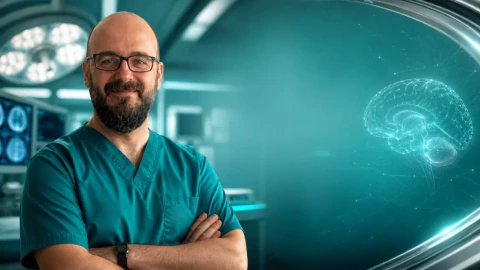
When you are diagnosed with a brain tumor or brain mass, several different treatment options may be discussed: surgery, Gamma Knife radiosurgery, chemotherapy, radiation therapy, or regular MRI follow-up. At this stage, seeking a second opinion is not meant to delay the process; rather, it can be helpful in gaining a clearer understanding of the diagnosis, the risks, and the options that are right for you.
Prof. Dr. Alp Özgün Börcek provides services related to the evaluation and treatment planning of brain tumor as part of pediatric and adult neurosurgery at Ankara Güven Hastanesi. The following text is for general informational purposes only; an examination is required for a personal diagnosis and treatment plan.
In What Situations Is a Second Opinion Useful?
When an MRI or CT scan reveals a brain mass, lesion, or tumor, the first step for most patients is to have the images and reports reviewed by a neurosurgeon. A second opinion involves having this evaluation repeated by a different specialist. The goal is not to prolong the process, but to help you make a more informed decision.
The second view may be considered, particularly in the following situations:
- If your MRI report contains terms such as "mass," "lesion," "contrast-enhancing area," "meningioma," "glioma," or "metastasis," and you want to clarify what they mean,
- If you have been advised to have surgery but do not fully understand its purpose, risks, or alternatives,
- If the tumor is located in a critical area near the centers of speech, movement, vision, or balance
- If the pathology report has come back and the grade, molecular markers, or additional treatment plan are confusing,
- If you're having trouble deciding between chemotherapy, radiation therapy, or targeted therapy options
- If you have previously undergone surgery or treatment and there is a suspicion of recurrence (relapse)
- If you’d like to get a different perspective on the treatment approach from your primary care physician,
Seeking a second opinion does not mean “I’m receiving the wrong treatment.” Most of the time, it supports the current plan; sometimes, however, a small but important detail (such as follow-up frequency, timing of surgery, or Gamma Knife eligibility) becomes clearer. In either case, the goal is to determine the most appropriate and safest course of action for you.
What Documents Are Required?
Coming prepared to your second appointment ensures that the meeting goes smoothly. If possible, please bring the following documents with you or share them digitally before the appointment:
- Recent brain MRI or CT scans (CD, USB, or digital link — a report alone is not sufficient)
- Radiology Reports (initial scan and follow-up scans, if any)
- Pathology Report (if surgery or a biopsy was performed)
- Medical summaries of previous surgeries or treatments
- List of medications you are taking (especially blood thinners)
- Any chemotherapy or radiation therapy plans, or oncology notes
It is not a problem if the images were taken at different facilities; what matters is that all series (with and without contrast) are complete. The records can be reviewed in advance; however, in most cases, the patient must come in for an examination so that their neurological status can be assessed in person.
What Is Evaluated During the Second Interview?
During the second consultation, the MRI report is not the only factor considered. The evaluation is conducted comprehensively under the following headings:
- Symptoms: Symptoms such as headache, seizures, balance problems, changes in vision or speech, weakness on one side of the body, or personality changes
- Neurological examination: Findings related to strength, sensation, reflexes, and coordination
- Viewing: The tumor's location, size, margins, presence of edema (swelling), and growth rate (compared to previous images)
- Tumor type and behavior: Benign or aggressive; suitability for surgery, radiosurgery, or follow-up
- The patient's general condition: Age, comorbidities, medication use
- Previous treatments: Have you had surgery, radiation therapy, or chemotherapy before?
The same MRI finding may require a different approach depending on the clinical presentation. For example, the evaluation of a small, asymptomatic meningioma is not the same as that of a rapidly growing lesion causing neurological deficits. For this reason, second opinion is a comprehensive process that includes not only the report and images but also you.
If Surgery Is Recommended, What Questions Should You Ask?
brain tumor surgery is a major decision. Don’t hesitate to ask the following questions during your second opinion appointment or your initial consultation:
- The surgery's purpose What is it? (Is the biopsy for diagnosis, to reduce the tumor, or to remove it completely?)
- The tumor's Can the entire thing be removed?, or will it be left within the safe zone?
- Surgery What risks? Does it carry any risks? (such as speech, movement, vision, or loss of consciousness)
- Surgery Can it be postponed?, or is it an emergency?
- Alternative treatments What are they? (Gamma Knife, follow-up, chemotherapy, etc.)
- Post-surgery What can be expected? Intensive care, length of hospital stay, recovery process
- Pathology Report How does the treatment plan change during or after surgery?
- Post-surgery additional treatment (Is radiation therapy or chemotherapy necessary?)
The answers to these questions vary depending on the type and location of the tumor. A second opinion provides a safe and appropriate setting to ask these questions; it helps you make your decision based on information, rather than under pressure.
Gamma Knife or Could There Be a Tracking Option?
Surgery is not the first or only option for every brain tumor. In some cases, Gamma Knife radiosurgery or Follow-up with regular MRIs It might be suitable.
Follow This approach is generally considered in the following situations: small, slow-growing, asymptomatic benign tumors that are not located in a critical area. In such cases, MRI scans are performed at regular intervals to monitor for growth.
Gamma Knife It can be considered for selected small and medium-sized tumors, particularly in areas where the surgical risk is high. It is not suitable for all tumor types and sizes; the decision is based on the tumor’s location, size, and clinical status.
During the second consultation, these options should also be discussed openly. In some cases where surgery has been recommended, a different assessment may lead to the conclusion that observation or Gamma Knife is more appropriate; in other cases, the opposite may be true, and the need for prompt surgery is emphasized. The final decision is made through a multidisciplinary evaluation, taking the patient’s specific circumstances into account.
How Does the Second Interview Process Work?
- Appointments and document sharing: MRI images and reports are sent before the appointment or on the day of the appointment.
- Preliminary review: The images and available documents are reviewed.
- Examination: Symptoms and neurological status are evaluated together.
- Sharing opinions: The diagnosis, treatment options, risks, and recommended course of action are explained.
- Decision: It is up to you whether to continue with the current plan, update it, or seek additional input.
The second consultation is usually completed in a single session. If necessary, additional imaging or a second opinion from another specialist may be recommended. This process does not interrupt your communication with your original treatment center; you have the right to request a copy of your medical records.
What Should You Do in an Emergency?
It is appropriate to wait for the second appointment non-existent There are certain situations. If any of the following apply, go directly to the emergency room:
- A sudden and severe headache (of a type you haven't experienced before)
- Seizure (especially the first one)
- Impaired consciousness or speech impairment
- Rapidly progressing weakness in the arms or legs
- Vision loss or double vision
These symptoms may indicate increased intracranial pressure or a neurological emergency. If the patient is stable, it is appropriate to schedule a second opinion appointment.
In cases of a diagnosis of brain tumor or a brain mass, surgery, Gamma Knife, and follow-up options should be evaluated on a case-by-case basis.
Schedule an Appointment via WhatsApp ContactRelated Pages


Frequently Asked Questions
In most cases, yes. MRIs and reports can be reviewed in advance; however, symptoms and findings from the neurological examination are an important part of the treatment decision. For patients coming from out of town, it may be possible to have their documents evaluated digitally first; in this case, it is recommended to have a preliminary consultation with the reception desk.
Consult a neurosurgeon without panicking. A "mass" does not always mean cancer; sometimes it refers to benign lesions or those that require follow-up. What’s important is evaluating the report and the images together.
Sometimes yes, sometimes no. A second opinion may support the current plan or suggest small but important updates (such as the timing of surgery, follow-up frequency, or additional treatment). The goal is to determine the most appropriate and safest course of action.
No. Suitability varies depending on the type, size, and location of the tumor, as well as the clinical condition. Gamma Knife For more information, please visit the relevant page.
Symptoms, neurological examination, imaging findings, tumor type, and the patient’s overall condition are evaluated together. Decisions are not made based on a single MRI finding.
If the documents are ready, most evaluations are completed in a single appointment. If additional imaging or a second opinion from another specialist is required, the process may take longer.
No. Seeking a second opinion is a common and sensible approach, especially when making important decisions such as those regarding surgery. You have the right to request a copy of your medical records.
No. brain tumor can be benign or malignant. Even benign tumors may require treatment, depending on their location and size; the word "tumor" does not always mean cancer.
In some cases, yes. Options such as follow-up, Gamma Knife, radiation therapy, or chemotherapy are evaluated based on the type of tumor. The appropriate course of action varies for each patient.
Yes. MRI images and reports can be sent digitally in advance. You may need to come to Ankara for the examination; please contact us for a preliminary evaluation.
Author: Prof. Dr. Alp Özgün Börcek
Last updated: July 2, 2026
This content is provided for informational purposes only; it is not intended to replace a personal diagnosis or treatment.