Tethered Cord Syndrome
tethered cord syndrome, is a neurological condition caused by the spinal cord being unable to move freely within the spinal canal and being pulled downward. In children, it may be recognized by a dimple in the lower back, excessive hair growth, skin discoloration, foot deformities, difficulty walking, leg pain, or problems with bladder and bowel control.
Prof. Dr. Alp Özgün Börcek
Neurosurgery
Pediatric Neurosurgery
Ankara Güven Hastanesi
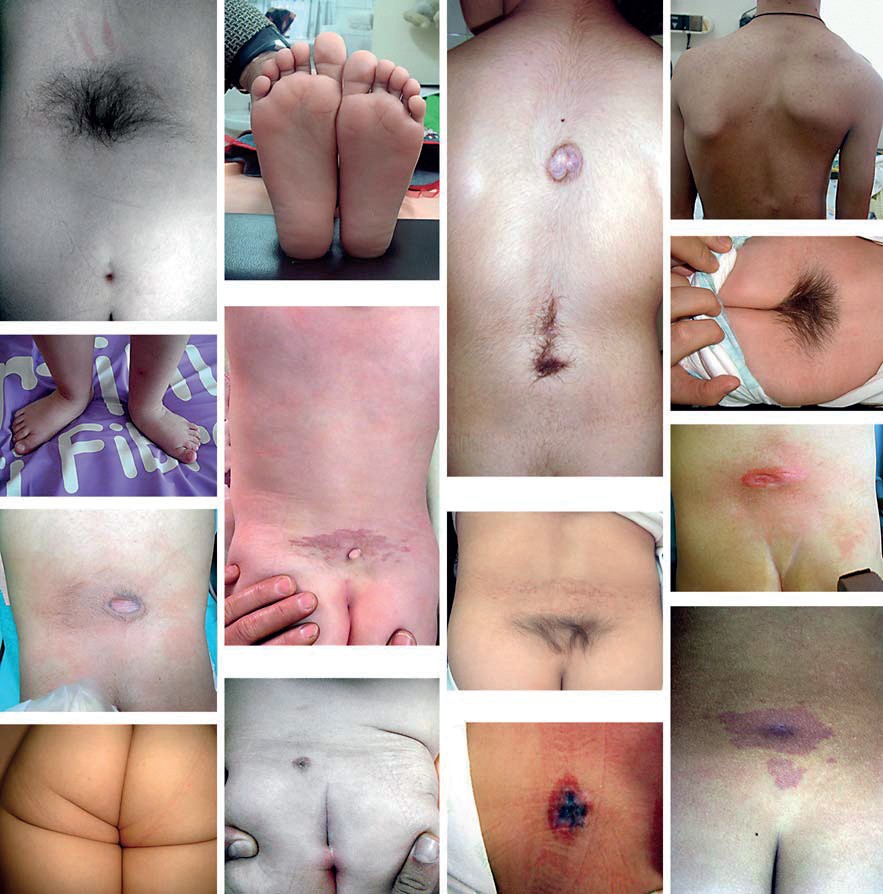
If your child has a dimple in the lower back, spots on the back as shown in the image below, changes in gait, foot deformities, or urinary problems, an evaluation for tethered cord syndrome may be necessary.
Schedule an Appointment via WhatsApp Get Appointment Information
Prof. Dr. Alp Özgün Börcek
Neurosurgery
Pediatric Neurosurgery
Ankara Güven Hastanesi
tethered cord syndrome, spinal dysraphism, thick filum terminale, and evaluation of pediatric spine and spinal cord disorders .
This content is for informational purposes only; a medical examination is required for diagnosis and treatment.
For more information our information booklet (PDF) You can also check it out.


What Is Tethered Spinal Cord Syndrome?
tethered cord syndrome, known in English as tethered cord syndrome , a condition in which the spinal cord cannot move freely within the spinal canal. The terms “tethered cord” and “filum oleosum” are also commonly used to describe the same condition.
We can think of it in the simplest terms as follows: The spinal cord is like a large nerve cable that originates in our brain and carries messages to our body. Normally, the spinal cord can move freely within the fluid-filled space of the spinal canal. As we move or, in children, as they grow taller, the spinal cord adapts to these changes.
In the case of tethered cord syndrome, the lower end of the spinal cord becomes tethered to a piece of tissue. This tissue may be a thickened ligament, fatty tissue, a congenital spinal cord anomaly, or scar tissue resulting from a previous surgery.
When the spinal cord is trapped, tension may develop in the spinal cord as the child grows or as the person moves. Over time, this tension can affect the blood supply to and function of the nerves. As a result, weakness in the legs, foot deformities, gait abnormalities, pain, or bladder and bowel problems may develop.
Not every imaging finding necessarily means surgery is required. The decision regarding treatment is made by evaluating the child’s symptoms, neurological examination, MRI findings, and follow-up process together.
For more information our information booklet (PDF) You can also check it out.
What Causes a Tense Spinal Cord?
tethered cord syndrome is most often associated with the spine and spinal cord not developing completely normally during fetal development. Less commonly, adhesions that develop later can also cause tension.
Common causes include:
- Thick filum terminale: It refers to the condition in which the thin ligament at the very end of the spinal cord is thicker, shorter, or fatty than normal.
- Spinal lipoma: Fatty tissue attached to the spinal cord or its lower end can pull the spinal cord downward.
- Spina bifida occulta and closed spinal dysraphism: Even though the skin is closed, there may be congenital abnormalities in the development of the spine and spinal cord.
- Dermal sinus tract: It may be a congenital channel extending from the skin surface toward the spinal canal.
- Spina bifida: There may be cases where the spinal cord is divided into two by a bone- or cartilage-like structure.
- Postoperative adhesions: Scar tissue that forms following previous lower back or spinal cord surgeries can cause the spinal cord to adhere to surrounding tissues.
What Symptoms Should You Watch For?
tethered cord syndrome can present with different symptoms at different ages. In children, symptoms may become more pronounced, especially during growth spurts.
Skin Marks
In newborns and infants, these are usually the first physical signs (See the image above).
Certain skin findings in the lumbar region may be indicative of underlying spinal cord developmental anomalies:
- A deep dimple or hole-like appearance in the lower back
- Noticeable hair growth in the lower back area
- A soft, fatty mass under the skin
- Red birthmark or discoloration
- A small skin opening with a discharge in the midline
- Noticeable asymmetry along the hip line
None of these findings on their own necessarily indicates a tethered cord syndrome. However, if there are skin signs—especially those that are deep, located along the midline, or associated with other findings— further evaluation is warranted.
In addition to skin findings, one foot being smaller or misshapen compared to the other, or one leg being shorter, may also be among the first visible signs.
Movement and Postural Abnormalities
- Late onset of walking
- Imbalance while walking
- Frequent falls
- Walking on tiptoes
- In-toeing or foot deformity
- Thinning of the legs or loss of strength
- Spinal curvature, or scoliosis
- Lower back, hip, or leg pain
Changes in Toilet Habits
- Failure to complete toilet training despite being old enough
- A child who has been potty-trained starting to wet the bed again
- Frequent urination
- Sudden urge to urinate
- Inability to fully empty the bladder
- Recurrent urinary tract infections
- Chronic constipation
- Fecal incontinence
If these findings are present, a joint evaluation by a pediatric urologist and a neurosurgeon may be necessary.
When Is a Neurosurgery Evaluation Necessary?
In the following situations, the evaluation should not be delayed
- On the midline of a newborn baby's back the symbols shown in the image above If you have any symptoms, be sure to see your doctor as soon as possible
- If a child has a newly developed walking disorder
- If you are experiencing weakness in your legs
- If the foot deformity is progressing
- If you are experiencing urinary incontinence or bladder control issues
- If a child who has already been potty-trained starts having accidents again,
- Lack of toilet training
- If your back or leg pain is getting worse
- If there is a deep dimple, a hole, discharge, or noticeable hair growth in the lower back area
- If an MRI has raised suspicion of a low-lying conus, thick filum, lipoma, or tethered cord,
These findings do not necessarily mean that surgery is required. However, it is important to undergo an evaluation before any loss of neurological function develops.
If your symptoms or your child’s symptoms are concerning, early evaluation is important.
Schedule an Appointment via WhatsAppHow Is the Diagnosis Made?
The first step in diagnosis is a visual examination. In fact, the symbols in the image above If present, further evaluation is required. In older children, the child’s gait, leg strength, reflexes, foot structure, spinal curvature, skin findings, and bladder and bowel control are assessed.
MRI
The most important imaging method for diagnosis is an MRI scan of the lumbar region. MRI can be used to assess where the spinal cord ends, the thickness of the filum terminale, spinal cord lipomas, dermal sinuses, syringomyelia, or associated spinal anomalies.
Ultrasound
Especially in infants during the first few months, since the bone structure has not yet fully closed, an ultrasound may be helpful in some cases. However, in older infants and children, an MRI is usually required for diagnosis.
Urodynamics
Even if the child does not have obvious urinary incontinence, in some cases a urodynamic test may be necessary to determine whether the bladder nerves are affected. This evaluation is particularly important if the child has symptoms such as a urinary tract infection, urinary incontinence, urgency, or an inability to fully empty the bladder.
For more information our information booklet (PDF) You can also check it out.
When Is Surgery for a Tight Spinal Cord Necessary?
tethered cord syndrome is a mechanical problem. In other words, the spinal cord is attached to or stretched against tissue. Therefore, if there is actual tension, it is generally not possible to eliminate this mechanical tension with medication.
However, this does not mean that every patient diagnosed with tethered cord syndrome must undergo surgery. The decision to operate is made by evaluating the patient’s age, symptoms, neurological examination findings, bladder and bowel functions, MRI findings, and the risk of disease progression together.
Surgery may be considered in the following situations:
- If you have weakness in your legs or difficulty walking
- If the foot deformity is progressing
- If you have noticeable lower back, hip, or leg pain
- If there are symptoms such as urinary incontinence, frequent urination, or an inability to fully empty the bladder,
- If accompanied by constipation or problems with bowel control
- If the MRI findings are consistent with the clinical presentation
- If there is concern about the risk of progressive nerve damage over time
The primary goal of surgery is to reduce pressure on the spinal cord, preserve existing nerve function, and lower the risk of progressive damage. It may not always be possible to fully reverse pre-existing permanent nerve damage. For this reason, timely evaluation is important.
When Do We Recommend Surgery?
The decision to perform surgery for tethered cord syndrome should always be tailored to the individual. There are two main approaches to this issue in the literature.
The first approach is to closely monitor children who have no specific symptoms and to perform surgery only if neurological, orthopedic, or urological problems arise. The goal of this approach is to protect children who have no symptoms from unnecessary surgery.
The second approach, particularly in children who are still growing, recommends freeing the spinal cord before problems arise, provided that tethered cord syndrome has been reliably diagnosed. The approach aims to prevent leg weakness, foot deformities, gait abnormalities, scoliosis, or bladder and bowel problems that may develop in the future.
My personal approach is closer to second opinion. Because it is not always possible to know with certainty in advance which child will develop problems due to a tight spinal cord and when. Furthermore, once nerve tissue or bladder function has been affected, even if surgery is performed, it may not always be possible to fully restore the lost functions.
For this reason, in children whose growth is not yet complete, if a stretched spinal cord has been reliably diagnosed—especially if MRI findings are prominent or if the condition is accompanied by skin findings, foot deformities, changes in gait, pain, or urinary problems , I prefer to discuss the option of surgery in detail with the family.
The goal here is not to say, “You must have surgery immediately.” The goal is to try to prevent the spinal cord from being stretched further as the child grows and to prevent the development of problems that could become permanent in the future. For some children who have no symptoms, are considered low-risk, and have completely normal examination findings, close monitoring may also be an option.
The Surgical Process and Safety
Many families are understandably concerned when they hear the term “spinal cord surgery.” tethered cord syndrome surgeries, while varying depending on the type of condition, are most often elaborate and carefully planned procedures.
In particular, the surgery may be more limited . In more complex cases, however—such as those involving a lipoma, adhesions, a dermal sinus, a spina bifida malformation, or scar tissue resulting from previous surgery—the procedure is planned in greater detail.
As with any spinal surgery, tethered cord syndrome surgery also carries serious risks—such as nerve damage, loss of strength, or paralysis—in theory. However, modern surgical techniques, operating under a microscope, an experienced team approach, and the nerve monitoring system used during surgery help reduce these risks.
In our own practice, over the course of nearly 20 years of experience, my team and I have not encountered any serious complications—such as permanent paralysis— associated with tethered cord syndrome surgery. This does not mean the risk is zero; however, thanks to proper patient selection, careful surgical planning, and advancing technology, surgical safety is much better today.
In appropriate patients, neuromonitoring—that is, a nerve monitoring system—may be used during surgery. The length of hospital stay, time to ambulation, and recovery process vary depending on the patient’s age, the type of surgery, and any accompanying anomalies.
If I Don't Have Surgery, Will My Condition Definitely Get Worse?
The answer to this question is not the same for every patient. There is no rule stating that every patient with a strained spinal cord will necessarily experience severe problems. In some patients, the strain may remain asymptomatic for a long time.
If left untreated or unmonitored, some patients may develop the following problems:
- Urinary incontinence or an inability to fully empty the bladder
- Recurrent urinary tract infections
- Constipation or fecal incontinence
- Lower Back and Leg Pain
- Gait and Balance Disorders
- Weakness or fatigue in the legs
- Foot deformities
- Scoliosis
For this reason, the decision to operate should not be made hastily but should be tailored to the individual patient. If neurological or urological symptoms have begun, early intervention becomes even more important in preventing permanent damage.
Is Non-Surgical Follow-Up Possible?
In some children, if there is no significant neurological deficit, no symptoms, or if the findings are stable, observation may be preferred. However, this decision must be made following an evaluation by a pediatric neurosurgeon.
The following areas are monitored:
- Walking and Leg Strength
- Foot deformity
- Lower Back and Leg Pain
- Bladder and Bowel Control
- The Development of Scoliosis
- MRI findings
- Urodynamic test results, if necessary
If new symptoms develop in the children being monitored, the treatment plan is reassessed.
Evaluation for Tethered Spinal Cord Syndrome in Ankara
tethered cord syndrome; it may require a joint evaluation by various specialties, such as pediatric neurosurgery, pediatric urology, orthopedics, and physical therapy. Early evaluation is particularly important if children exhibit skin findings in the lower back region, foot deformities, gait abnormalities, or urinary problems.
Prof. Dr. Alp Özgün Börcek is evaluating tethered cord syndrome, spinal dysraphism, thick filum terminale, spinal cord lipoma, and related pediatric spine and spinal cord conditions are evaluated at Ankara Güven Hospital.
You can contact us in Ankara for a tethered cord syndrome evaluation.
Schedule an Appointment via WhatsApp ContactFrequently Asked Questions
tethered cord syndrome, a condition in which the spinal cord and its inability to move freely within the spinal canal, causing it to remain under tension as it adheres to surrounding tissues. This condition can affect the legs, feet, walking, and bladder and bowel functions.
Yes. Tethered cord syndrome is referred to in Turkish as "gergin omurilik sendromu."
Not every dimple in the lower back indicates a tethered cord syndrome. However, dimples that are deep, located along the midline, and accompanied by hair growth, a skin lesion, discharge, or a mass may require evaluation.
Gait abnormalities, foot deformities, leg weakness, lower back or leg pain, scoliosis, urinary incontinence, constipation, and skin lesions in the lower back area may be observed.
The diagnosis is made through physical examination and imaging. The most commonly used imaging method is an MRI of the lower back. If there are urinary problems, additional tests, such as urodynamics, may be necessary.
Surgery is not necessary for every patient. The decision to perform surgery is based on the patient’s symptoms, neurological examination, MRI findings, urological evaluation, and the risk of disease progression.
This issue is controversial in the literature. The decision should be made based on a comprehensive evaluation of the child’s age, MRI findings, physical examination, any accompanying skin or orthopedic findings, and the family’s expectations.
The goal of the surgery is to reduce pressure on the spinal cord, preserve existing functions, and prevent progressive nerve damage.
Some symptoms may improve over time. However, in cases of nerve damage that has persisted for a long time, complete recovery may not always be possible. The primary goal of surgery is often to halt the progression of the condition and preserve function.
In some patients, adhesions or tension may develop again. For this reason, postoperative follow-up is important.
For tethered cord syndrome, a brain and nerve surgery evaluation—particularly pediatric brain surgery—is appropriate for pediatric patients.
Author: Prof. Dr. Alp Özgün Börcek
Medical specialty: Neurosurgery
Area of interest: Pediatric neurosurgery, spinal and spinal cord disorders
Last updated: July 2, 2026
This content is provided for informational purposes only. It is not intended to replace personal diagnosis or treatment. If you have any symptoms or concerns regarding your child, you should consult a doctor.