Pediatric Brain Tumors
If a brain tumor or mass is suspected in a child, you can seek an expert evaluation without panicking; the treatment plan is tailored to the child.
Prof. Dr. Alp Özgün Börcek
Neurosurgery
Ankara Güven Hastanesi
You can schedule an appointment for a second consultation or examination.
Schedule an Appointment via WhatsApp Contact
Prof. Dr. Alp Özgün Börcek
Neurosurgery
Ankara Güven Hastanesi
This content is for informational purposes only; a medical examination is required for diagnosis and treatment. Medical texts must be reviewed by a doctor.
Prof. Dr. Alp Özgün Börcek, Ankara At Güven Hospital pediatric neurosurgery As part of this program, we provide services related to surgical treatment of brain tumor and, when necessary, other treatment options such as Gamma Knife. The text below is for general informational purposes only; a medical examination is required for diagnosis and to develop a treatment plan.
The answers provided here to frequently asked questions about brain tumor and related surgeries are based on current medical information and are intended to provide general information. Each child should be evaluated on a case-by-case basis, and you can obtain the most detailed information from the doctor who will be treating your child.
If a Brain Mass Is Detected on an MRI, What Should Be the First Step?
When an MRI or CT scan reveals a brain mass or tumor, the report and images must first be evaluated by a pediatric neurosurgeon. A systematic evaluation process is recommended, without panicking.
During the initial consultation, symptoms, findings from the neurological examination, and imaging results are evaluated together.
Does Every brain tumor Require Surgery?
No. For some tumors, regular MRI follow-up may be sufficient; for others, Gamma Knife or surgery may be considered. The decision depends on the tumor type, location, size, and symptoms.
How Are Decisions Made in Cases of Complex Brain Tumors?
A multidisciplinary evaluation is important for deep-seated tumors, those near critical areas, or tumors that have been previously treated. For more information, High-Risk Brain Tumors You can check out the page.
Under What Circumstances Is Surgery, Gamma Knife, or Follow-Up Considered?
Surgery is generally considered for symptomatic or growing tumors. Gamma Knife It can be applied to selected small tumors. Watchful waiting, on the other hand, may be preferred for some benign or slow-growing lesions.
What Documents Are Required for the Second Interview?
Please bring your MRI images (on CD or in digital format), radiology reports, pathology report (if available), and previous discharge summaries. Second opinion You can schedule an appointment for this.
Documents You Should Bring With You to Your Appointment
- Current MRI or CT images and reports
- If there is a pathology report
- Medical summaries of previous surgeries or treatments
- List of medications you are taking
brain tumor What Are the Symptoms?
brain tumor can present with various symptoms, such as headaches that worsen in the morning, nausea, vomiting, balance problems, and vision or speech difficulties. In children, developmental delays or behavioral changes may also be noticeable. Symptoms may vary depending on the tumor’s location.
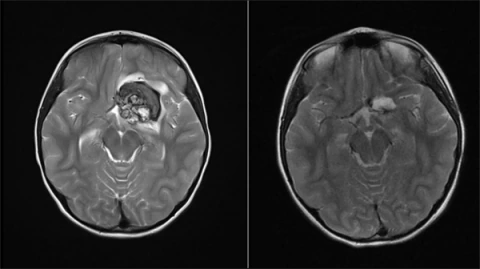
brain tumor What is it?
brain tumor are masses formed by the uncontrolled growth of cells in or around the brain. They can be benign or malignant. Tumors in children usually originate directly from brain tissue; the metastatic form (spread from another organ) seen in adults is rarer.
brain tumor What Causes It?
Most brain tumors are incidental, but genetic factors, radiation exposure, and prolonged exposure to certain chemicals can increase the risk. In children, congenital genetic syndromes may play a role in certain types of tumors.
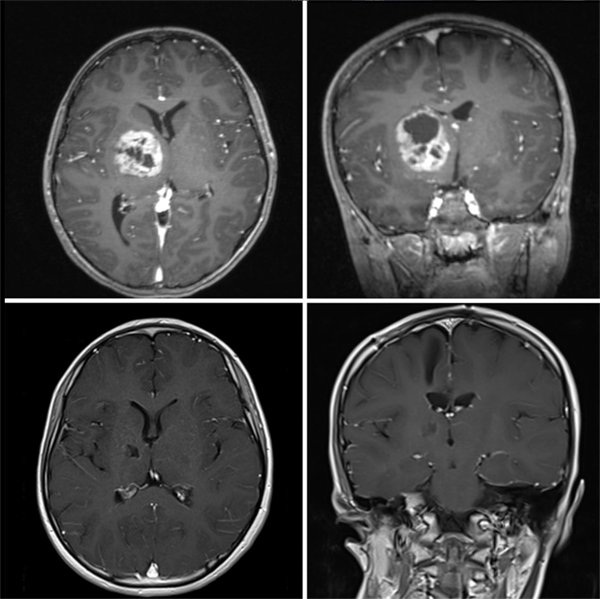
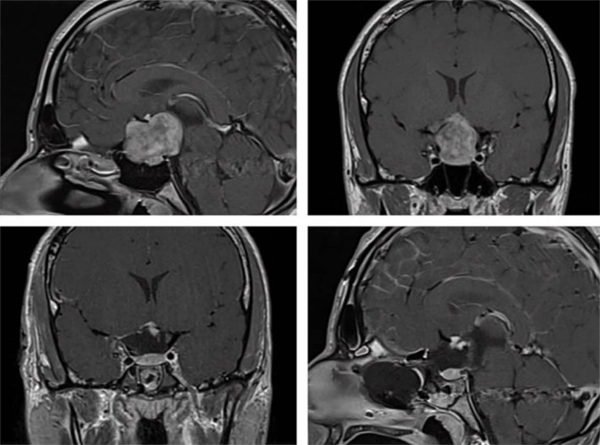
brain tumor How Is the Surgery Performed?
In brain tumor surgeries, advanced techniques such as the microscope and neuronavigation are used to safely remove the tumor. The goal is to remove as much of the tumor as possible while preserving brain function. Because children have a smaller blood volume, surgical and anesthesia planning is tailored to their age.
Frequently Asked Questions
The answer to this question depends on the patient’s condition at the time of presentation, their symptoms, the findings of the neurological examination, the results of MRI and other radiological imaging studies, the preferences of the child’s legal guardian, and, most importantly, the doctor’s recommendation. In the field of neurosurgery, because the tissue being treated is very delicate and the procedure involves slightly more risk than in other specialties, “WATCHFUL WAITING” is always a viable option. If the patient is not affected by the identified problem and the criteria mentioned above are met, your doctor may decide to monitor your patient and observe how the condition changes over time. For this purpose, for example, a new imaging study may be requested 3–6 months later, followed by a new evaluation.
On the other hand, if your patient is affected by the disease (for example, if they are experiencing seizures, have vision problems, or are experiencing weakness in their arms or legs) or if radiological images suggest that the monitoring option would be risky, your doctor will decide to proceed with surgery.
Each patient is evaluated on a case-by-case basis, and in the field of medicine, no two patients are alike. While your neighbor’s child, who has similar problems, may not undergo surgery, surgery may be recommended for your patient. Or, a change observed in the follow-up X-rays of a patient under your care may lead to a decision to perform surgery.
The decisions your trusted doctor makes are personalized decisions made for the well-being of both you and your patient.
Thanks to advances in technology, radiological images now provide us with significantly more information than they did 10–15 years ago. In many diseases, these images provide crucial information and help your doctor form an opinion about the condition; HOWEVER, no technique other than surgery can currently provide a DEFINITIVE DIAGNOSIS. For this reason, in patients where surgery is considered necessary, it is essential to remove either a portion (biopsy) or the entire affected tissue. This allows the specific pathology to be identified through microscopic examination, and a decision is made on how the patient’s treatment should proceed.
Personally, in non-urgent situations, I am a doctor who encourages my patients to seek a second opinion from other doctors. The most important point to remember is that in medicine, two plus two does not always equal four. We are dealing with human tissue, and nervous system tissue is one of the most sensitive tissues in the human body. Every doctor will share their opinion with you based on their own knowledge and previous experience. While one doctor may recommend surgery, another might suggest waiting a little longer; or while one doctor recommends one type of surgery, another might recommend a different type—and medically speaking, neither is wrong. What matters is the decision you make and your trust in the doctor you choose to treat you. Your trust in your doctor is a crucial decision that will influence the course of your illness.
The most important principle of neurosurgery—as in other medical specialties—is, first and foremost, to do no harm to the patient and, whenever possible, to ensure that the patient leaves the operating room in the same condition as when they entered, without experiencing any additional problems. The scientifically accepted method for achieving this goal is to perform the safest possible tumor resection. Technically, every pathology within the brain tissue can be completely removed, but what matters is the patient’s condition following the procedure. It is hardly possible to speak of a successful treatment in a patient whose tumor has been completely removed but who is unable to walk or see. As you can appreciate, brain tissue is extremely delicate, and once damaged, it may not always be possible to regain the lost functions. For this reason, neurosurgeons pay the utmost attention to ensuring that the patient’s overall condition—including their ability to walk, speak, see, etc.—is not compromised after surgery. For this reason, your doctor may avoid surgical procedures that they believe could harm your patient and, if necessary, may not remove the entire tumor. Your doctor will explain all of this to you, along with the results of the pre- and post-operative tests.
As you know—and as you’ve likely heard from almost every doctor—every surgical procedure carries various risks. In brain surgery, however, things are a bit different, and there are various risks that can affect the patient’s quality of life. Weakness in the arms or legs, facial paralysis, vision loss, and prolonged unconsciousness are among the primary risks. Your doctor will provide you with information about these risks before the surgery. Every surgery is a serious matter, and every precaution is taken to prevent complications; however, as you can appreciate, this is not like repairing a car, and risks may arise despite all precautions. Fortunately, complications such as death and coma are quite rare.
Because brain tissue is very delicate, neurosurgeons do not want anything inside the skull that could damage it. For this reason, a second surgery may be necessary to address problems such as bleeding, which are rarely seen on X-rays taken after the initial surgery. Your doctor will provide you with detailed information on this matter.
The fact that a tumor cannot be completely removed through surgery does not mean that this disease is incurable. The field of neurosurgery works closely with the fields of radiation oncology and medical oncology, and depending on the patient’s tumor type, radiation and drug therapies may be considered following surgical treatment.
Cancer surgery—oncological surgery—is a specialty that deals with the management of very challenging diseases. brain tumor are generally classified by grade. In brain tumors considered benign, the complete removal of the tumor generally reduces the need for additional treatments, whereas in malignant tumors, additional treatments are required to a large extent even if the entire tumor is removed. The primary goal is to minimize the likelihood of the tumor recurring.
brain tumor differs from tumors in other organs in many ways. Even benign tumors that have been completely removed may recur long after surgery. Although this risk is very low, I recommend that my patients remain under the care of a neurosurgeon for the rest of their lives. Follow-up visits, which are more frequent in the early years, are gradually spaced out to once a year and then to once every two or three years.
The answer to this question is generally no. Of course, solving major problems takes time, but what the patient’s family needs to know is that the surgeon is not performing the surgery for the entire duration the patient is in the operating room. Preparing a young child for surgery can sometimes take more than an hour. Doctors make every effort to keep the patient under anesthesia for as short a time as possible.
No! In the field of neurosurgery, the established approaches for accessing the nervous system and performing the necessary surgical procedures have been well-defined for many years and generally do not vary depending on the severity of the condition. The number of sutures placed has no relation to the extent of the surgery.
After brain surgery, cerebrospinal fluid may leak from the incision sites. If you experience this problem after being discharged, please contact your doctor as soon as possible.
Your doctor will explain everything you need to know. Unless you’ve been told to be especially careful about something, there are generally no serious restrictions. Having children start school as soon as possible will help them overcome the psychological effects of their illness.
At our clinic, in appropriate cases, the skull is closed using plates and screws after the craniotomy. If your child bumps their head immediately after surgery, they are unlikely to experience any serious problems; however, it is best to contact your doctor about any situation that concerns you.
If a brain tumor or mass is suspected in a child, you can seek an expert evaluation without panicking; the treatment plan is tailored to the child.
Schedule an Appointment via WhatsApp ContactRelated Pages


Author: Prof. Dr. Alp Özgün Börcek
Last updated: July 2, 2026
This content is provided for informational purposes only; it is not intended to replace a personal diagnosis or treatment.